On the Robustness of LLM-Based Dense Retrievers: A Systematic Analysis of Generalizability and Stability
Abstract
Decoder-only large language models (LLMs) are increasingly replacing BERT-style architectures as the backbone for dense retrieval, achieving substantial performance gains and broad adoption. However, the robustness of these LLM-based retrievers remains underexplored. In this paper, we present the first systematic study of the robustness of state-of-the-art open-source LLM-based dense retrievers from two complementary perspectives: generalizability and stability. For generalizability, we evaluate retrieval effectiveness across four benchmarks spanning 30 datasets, using linear mixed-effects models to estimate marginal mean performance and disentangle intrinsic model capability from dataset heterogeneity. Our analysis reveals that while instruction-tuned models generally excel, those optimized for complex reasoning often suffer a ``specialization tax,’’ exhibiting limited generalizability in broader contexts. For stability, we assess model resilience against both unintentional query variations~(e.g., paraphrasing, typos) and malicious adversarial attacks~(e.g., corpus poisoning). We find that LLM-based retrievers show improved robustness against typos and corpus poisoning compared to encoder-only baselines, yet remain vulnerable to semantic perturbations like synonymizing. Further analysis shows that embedding geometry (e.g., angular uniformity) provides predictive signals for lexical stability and suggests that scaling model size generally improves robustness. These findings inform future robustness-aware retriever design and principled benchmarking. Our code is publicly available at this https URL.
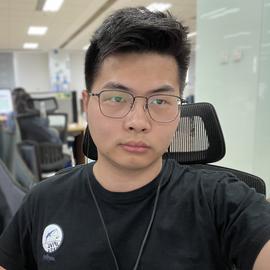
Yongkang Li
PhD Candidate
I am currently a PhD candidate in IR LAB, the University of Amsterdam, working with Prof. Evangelos Kanoulas. Before that, I got my master degree at Southern University of Science and Technology, Department of Computer Science and Engineering, SUSTech-UTokyo Joint Research Center on Super Smart City Lab, where I am supervised by Prof. Xuan Song in SUSTech and Prof. Zipei Fan at the University of Tokyo. What’s more, I received a B.E. degree in the School of Information and Communication Engineering, Beijing University of Posts and Telecommunications in 2020.